
AVOIR SES RÈGLES AU SOMMET DE L’EVEREST
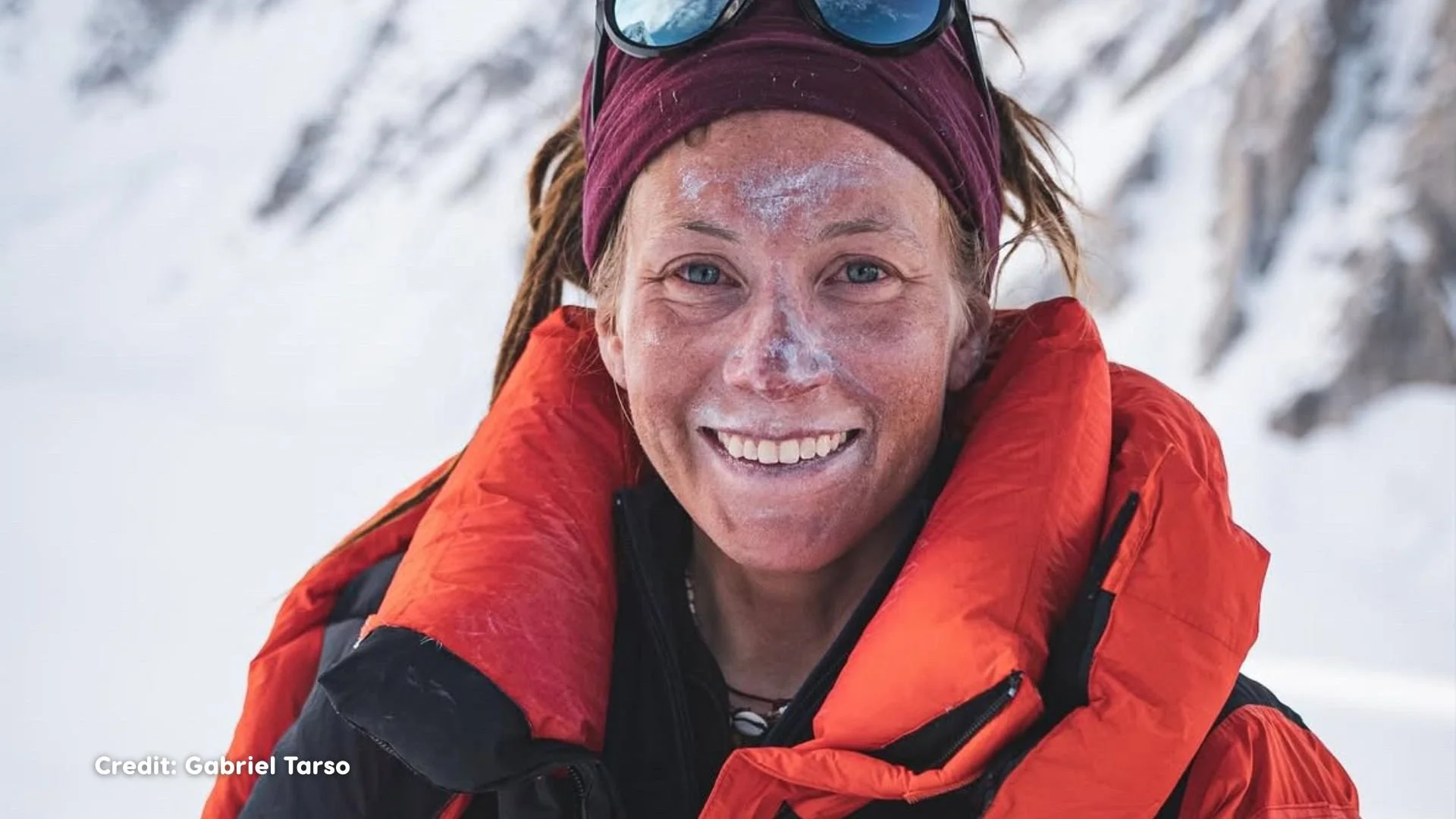
Kristin Harila is the fastest mountain climber on Earth. She completed the fourteen summits above 8,000 meters in just 92 days, setting a new world record on July 27th, 2023, alongside Lama Sherpa. She is also the fastest woman to have climbed both Mount Everest and Lhotse on the same day, in only eight hours.
Her accomplishments raise many questions regarding menstrual health. Knowing that the menstrual cycle is deeply influenced by nutrition, stress, sleep and overall body balance, I wondered whether it was even possible to maintain a healthy cycle in such conditions.
She entered the death zone fourteen times during this expedition. Her body endured oxygen deprivation, relentless physical strain, profound sleep shortage, limited access to water, and irregular food intake. How does someone prepare for that? How does she deal with her period, possible PMS or heavy flow while enduring such a challenge?
I reached out to Kristin, and a few days later she replied with an enthusiastic yes. I interviewed her in Oslo, on the day she released her book, a work detailing her expeditions, her preparation, her world record—and also dark periods of time, such as the incident on K2 and the loss of Lama Sherpa a few months after their World Record.
Full interview transcript
■ A Tale From the Roof of the World
“When we do the big expeditions, there are so many days where we don't sleep and we don't eat.
The time in between the expeditions is also super important to recover and get ready for the next one.”
—
“I always liked to be outside and to be in nature. It's been natural for me to do that.
But I also did other things before I quit my job and went into these big mountains. I was doing many other things in between. So I think I was lucky to do that also, to learn other things.
And we have so much logistics and money and sponsorship and, of course, social media, all these other things that we have to do to be able to go and climb these big mountains.
So the training and the climbs, I shouldn't say it's easy, but at least… The other part is so big, especially finding sponsorship, because all these mountains are super expensive. So it takes a lot of time and effort to do that.
It's harder for women to get sponsorship, actually, than men, especially to do projects on these mountains, because it's been about men for so many years.
So I think it's been harder for women to get sponsorship. But I hope it will change in the future to show that we should have the same opportunities as men do.”
Being a woman in an environment historically dominated by men has shaped her experience:
“When you are a woman coming into this world and it's been so much about men, and the main part of people climbing these mountains are still men… Even if we see expeditions where there are more women than men, it happens now, we see that women are just as strong as men up in the mountain. But we still, on average, see it's much more men than women.”
High-altitude climbing is, above all, an exercise in learning to suffer:
“A big part is, of course, that you have to be prepared mentally that you're going to suffer a lot.
Summit push is going to be just really hard, challenging, uncomfortable. And it's not like running a marathon where it's super uncomfortable, and then you go in your shower and go to your bed and sleep well.
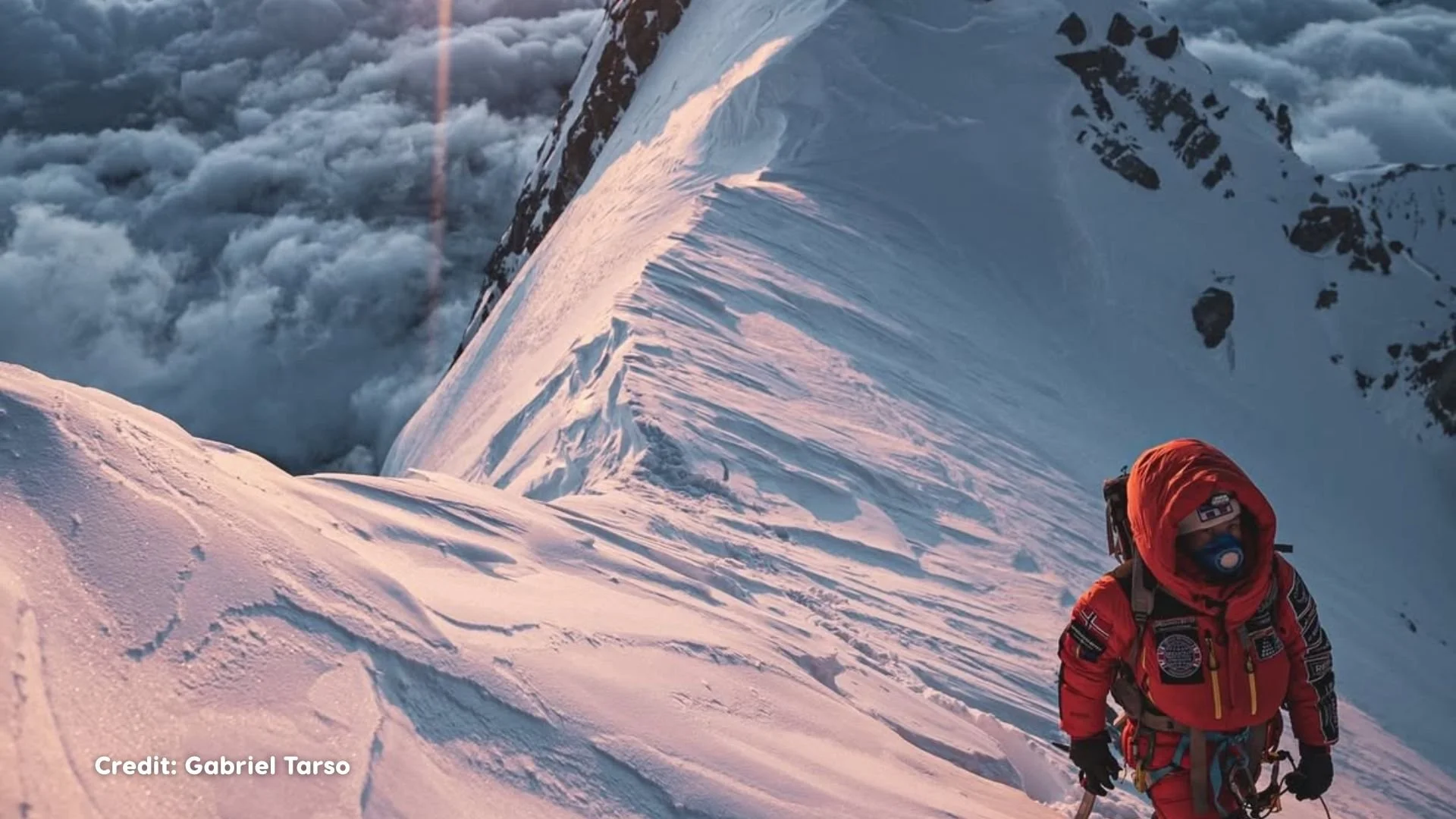
Here, you climb for 10, 20, 30 hours, and you come to a tent and there is no oxygen. So it just really feels bad. And there is no shower, there is very little food and maybe not even enough water to drink.
So up there, it's really hard conditions. And I think if you're not prepared for that suffering, then you're going to have a big problem.”
Even something as basic as going to the toilet can make or break an expedition for some people:
“The toilet situation and people that are not comfortable with tents (they cannot relax in the tent) they often turn around and go down. Because if you put all those things together and you still have to pee and poo outside, then people turn around.
I have a very natural relationship to going to the toilet. For me, it's just: do it, get it done. And of course, we try to find spots and locations for that.
On some of the mountains, we have this poop bag that I think is very good to use, also because I can cover myself a little bit up in that.
Very often we use the pee bottle inside the tent, so we don't have to go out at night to pee. So I think that's nice. But I see people struggle with that, and that they feel it's uncomfortable and it's hard for them. You're going to the toilet here and people are just passing there.” NB : Using fixed ropes, everyone goes up following the exact same path.
“And of course, it's very often much easier for men because they can just pull it out and pee. And we have to drag everything down. And if we have the harness and the big down suits, it's much more hassle for us to do it.
Some women have this pee-like tube, and they have it in this hard plastic. So you can open the down suit in front and you can put it in and pee like a man would do.
But I haven't used it. I'm not so comfortable because I feel like it's so easy that it comes in your down suit and I don't want to have a wet down suit. So I think for me, it's easy to just open it and take it the normal way.”
■ Being a Woman in High-Altitude Mountaineering
When it comes to menstruation, she considers herself fortunate:
“I've been very, very lucky because I don't have any pain. I don't have any big bleeding. I don't have any problems.
And I see women up there that have more problems. They have more pain, and they have more problems, maybe because they are having more bleeding or just are not so comfortable with not having a shower or water up there.
But I don't struggle much with it. I'm very straightforward in those things. I don't do so much hassle to hide or wait. If I have to go, I go.”
Self-care is, for her, the golden rule of the mountains:
“What I always say in the mountains is: the most important thing you can do is to take care of yourself. That's the only thing.
In the end, you have to take care of yourself. And if we are down, it's also the most important thing we can do, because if we don't, we have big problems.”
Menstruation at altitude can be very unpredictable:
“I know also a very normal thing for women up there is that they don't expect to have their period and it comes. It's very normal to get irregular periods up there.
So many struggle with that also. They come down and just say, ‘Oh, I wasn't supposed to have my period now and suddenly I started to bleed up there and I wasn't prepared for that.’
And so many women have that problem also when they are up.”
She underlined how male-dominated leadership can make these issues harder to discuss:
“And of course, the expedition leaders, they are mainly men. And of course, the Sherpas, they are men.
And it's not so easy for women to come in with those—not problems, but different challenges than the men have. And it's so easy for men that don't have this, compared to us.”
Even with her regular cycles, she always anticipates:
“Even if my period has been very regular. I still… because I know it can happen, so I always prepare a little bit extra: ‘Okay, what if and what do I bring?’
And we know we don't have any water to clean anything and for many days, we are above base camp.
When we are in base camp, we have—not a shower—but we very often have a tent where we have a basket with water, and then we can, of course, clean. And that's much easier.”
She also shared her history with contraception:
“I had an IUD for many years and that also works very fine for me. Earlier, before that, I had the pill — I didn't have any problem with that either — but I know that some doctors say it's not good to use the pill when we are up in high mountains because we can get blood clots. It's a higher risk of that. So they don't recommend going on the birth control pill if you are going up to the mountains. So that's why I changed. And now I have nothing. So now it's okay.”
When I asked if any expedition leader had ever discussed menstrual preparation with her, she answered:
“Never anyone ask me. But I think it's because everyone knows that I handle things and I fix things, and no one's really worried about me and those things.
And I don't think it's very normal that the expedition leaders or team are having discussions with the female climbers: ‘How do you prepare for your period up there?’ I haven't heard about it, at least. Maybe some do, but it's not common and it's not something I heard about.
She laughed about the overall toilet experience at altitude:
“Yeah. All this toilet situation is like… It's not so great! No.”
■ Research Gaps & Female Specificities
I shared with her how, in the past years, more and more people have been speaking about the menstrual cycle and, more broadly, menstrual health and subjects such as endometriosis, PCOS and other conditions that used to be taboo. Communication brings attention and money!
I also told her about the funding of some small, recent studies on women in hypoxic sports. Unfortunately, so far, many studies on the physiological responses to hypoxia have either excluded women or included only a limited number without analyzing sex-related differences. (Source: Women at Altitude: Sex-Related Physiological Responses to Exercise in Hypoxia.)
Recommendations for Women in Mountain Sports and Hypoxia Training/Conditioning
Women at Altitude: Sex-Related Physiological Responses to Exercise in Hypoxia
Juliana Antero, a researcher in elite sports, has suggested that after ovulation, some women may experience more difficulty pacing their breath at altitude.
When I asked Kristin if she had noticed anything like that, she replied:
“Well, not for myself. I haven't really… I don't feel anything.
I've been just really lucky with how it works for me and how easy it's been for me, especially when I hear others and how they feel more in bad shape and more tired.
I had a friend on this mountain we were on recently and she felt like, ‘Oh, I'm so swollen in my face and in my belly. I feel like I'm so swollen and heavy.’
So she was struggling more with… and she was like, ‘Oh, my period is coming now. It's just because it's coming soon.’
So I know it's normal to feel it. And I think she felt like, ‘Oh, I will feel it when I climb,’ because, of course, you don't feel the same.
Sometimes when I come down, I'm so tired. I've been so tired a couple of times. It's crazy. Really, really tired, really bad.”
When I asked how long she needs to recover, she said:
“I think I need very little time. But of course, it's because I'm in good shape.
I eat healthy and I have normal sleep and I don't drink alcohol. So I think my body is happy with my life in general, even if I have these periods of time where I have really hard days and maybe weeks where my body really gets pushed a lot.
Some of the sessions we have have been more than forty hours in total. During the climbs… maybe we have one day, when we have ten hours and the next day we maybe have five hours, and then we maybe have fifteen hours, and then the next day we maybe have a twenty-five hour-climb, and then we are back in base camp.
Of course, those days, you push your body a lot.
But I think, in general, my life has been very healthy. I always had a stable weight. Of course, when I climb, I lose some kilos. But I always have an upper and a lower weight, and I haven't been fat and I haven't been very skinny. So I always had this really good balance in that and also eating and training.
I think that's what made my body just function well. So that's good, I think.”
Years of training have conditioned her for extreme cycles of effort and recovery:
“My body is used to this period where I have this heavy training and a lot of long sessions.
So when I come down and I feel super, super tired. I can do one good night of sleep and eat normally and the next day I can be pretty okay again.”
She remembered how hard it was to recover after an illness on Everest:
“When I was on Everest in April and May, I got something… I don't know if it was COVID or… everyone was coughing. Absolutely everyone was coughing in base camp, it was so bad. Many got COVID, actually. So maybe it was that.
After that, I was coughing for a long time, even after being back home. So it took some time to fully recover.”
■ Origins of a Mountaineer
I went back to the beginning of her mountaineering journey. Before racing across the 8,000ers, she started in Africa:
“I did many different things. And it wasn't obvious that I was going to climb mountains.
I come from this place where it's totally flat. And when I climbed my first high mountain in 2015, that was Kilimanjaro. I was throwing up. I lost my sight, I couldn't see and I had a terrible climb.
But I managed to reach the summit and came down. And I was like, I just love the expedition life and the challenging times and to suffer and to be outside in nature. I think that's really important for me too.
So I'm sure that I found the right place in my life, for sure.”
She tried to describe what exactly draws her to these extreme expeditions:
“It's a mix of everything. It's a mix of being outside in nature and enjoying the mountains, the beauty of the mountains and the nature, and just having this amazing sunrise and sunset that we are lucky to see from the top of the world. It's super nice. So that's one part.
And it's another part that is the suffering, the effort that you have to put in. The uncomfortable things that make you really appreciate the comfortable things in life. So that's the other thing.
And of course, the expedition life. That means sleeping in tents and not having a toilet and shower for many, many weeks or months. And also having the team and your friends and being in the expedition team is really nice, I think.”
Her decision to go for all fourteen 8,000ers came after Everest:
“So in 2021, I climbed Everest. Then I decided I wanted to climb all 14.
I quit my job in 2019 and decided I needed to take a year off to do something else because I had been working a lot and I was like, I need to just do something else in my life, so I quit.
And then I went out and I saw Mount Everest for the first time and I was like: I really want to climb Mount Everest.
And of course, COVID came and put a stop on everything for a long time. And then I got a chance to climb Everest in 2021.
So I did 12 and didn't get the permit for the last two in Tibet. So then I did all 14 in 2023.
Of course, I had many, many mountains. In one and a half years, I had almost double 14. I was only missing two. So it was pretty heavy: 26 eight-thousand meters in one and a half years.”
When I asked how she found the motivation to start again after the permit issue, she answered simply:
“Yeah, it's so hard to climb this mountain and then… we didn't get the permit. It wasn't my fault. I had so many excuses to not start again.
For me, it was natural to just say: okay, of course I'm going to do it again. I decided right away. I don't like to quit.”
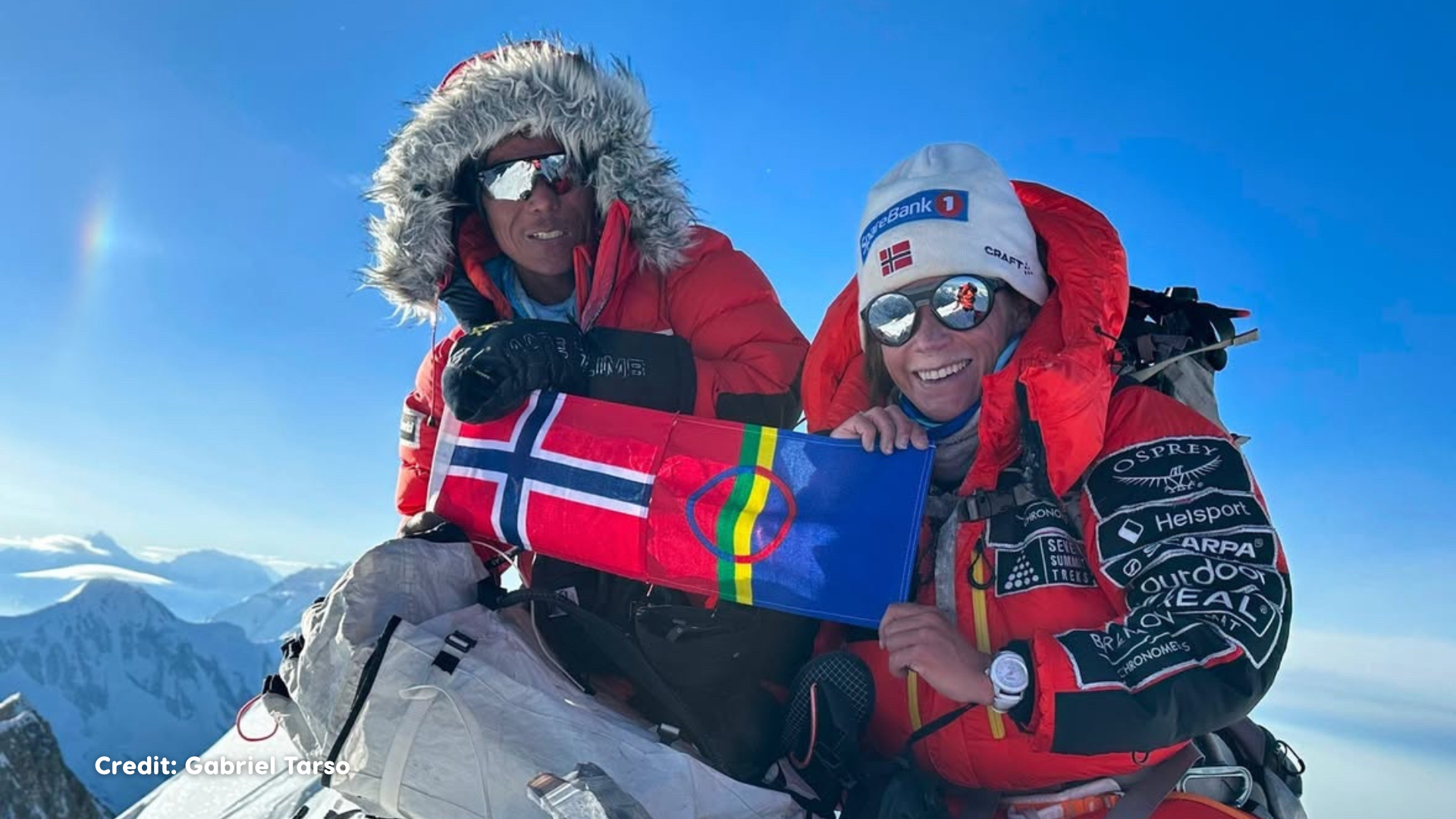
Her book project came after the record:
“I was thinking about writing a book in the end, of course. But we didn't really start until after I finished the project in 2023. I did a lot of documentation also because we have this documentary coming out in 2026.
So I did some writing and some voice recording and I did a lot of filming and pictures, so much! So that's why we have all these super nice pictures in the book. It's very, very nice.
We took a lot of these pictures ourselves also. Some of them [the photographers] managed to come up to the summit, but many times they didn't. So then we took the pictures ourselves.
Of course, I'm very glad today that we have a lot of pictures and film to look back on and to see. And I think if I didn't have any, it would be almost like I don't understand it myself.”
–
“So I have the tracking, a GPS track that I have on me. So I can always document where I am.
And we've also been open all the way on social media: ‘Okay, now we leave camp and now we go for the summit and now we are down.’ So we constantly share the trackers so people can actually follow.
And then, of course, on the summit, it's pictures and film to document that we actually have been there, on the right summit.
And also calling. So I always call from the summit, say: ‘Now we are up,’ with a satellite phone.
So that's the important thing: if you are trying to do some record or some things like that, you need to make sure that you can document what you have done.”
–
“I never felt a race. Never, no.
And I think that's why we have been safe also, because I never felt like any race, not any competition. I didn't feel pressure from sponsors.
I was so good at focusing on one mountain at a time and one step at a time. I think that kept us safe.
I think I'm good at having the right focus if it's challenging enough. If you find me working on the computer at home, I can end up doing a lot of other things. But when we climb these mountains, it's so challenging, and it's also life and death. If you're not really focused, it's a second and it goes wrong.
So I think that the challenge is so hard and that it's life and death, and that makes me be good at keeping focused on what's important.
And as we climb, it's not important with the record or the competition or race or anything. It's just one step at a time and getting safely up and down. That's it. So I've been good at that for sure.”
She also demystified the idea of constant crowds on the 8,000ers:
“All these things where we see a lot of people… I think we can say, of the 14, it's two mountains. So it's Everest and a little bit more on K2 and also maybe on Manaslu.
But on most of these mountains, there were very few people and not like we see in the pictures. And when there’s no one, we have to fix the ropes ourselves, or we just go with rope in between us. So we don't have these fixed ropes.
On Everest, because it's this big machine and we have 475 permits to climb (that’s only the climbers) and then you have the Sherpas and the guides also ; so you probably have 800–900 people on the permits for going there. So of course that's a lot of people.
And then you have this fixing team that goes in front to fix the ropes and things. But most of the mountains, it's not like that.”
Even on Everest, she and Lama often avoided the queues:
“On Everest, where we see a lot of people… I summited in 2021 and 2022 and 2023 and all those times, it's never been a problem with too many people.
But it's also because I'm very fast and my Sherpa has been fast.
So there's a few places on Everest and a few places on K2 where you cannot pass everyone but it's only a few times.
So if you are in good enough shape and you see the line, you're always able to go on the side and clip around and go much faster up. And we have done that so many times.
So for us, it hasn't been a problem. But of course, you have to be in really good shape. Because if you go in the line with a lot of people and you just want to go a little bit faster, then you are not able to pass. But if you're in good shape and much faster, you can always pass the whole group and it's no problem.
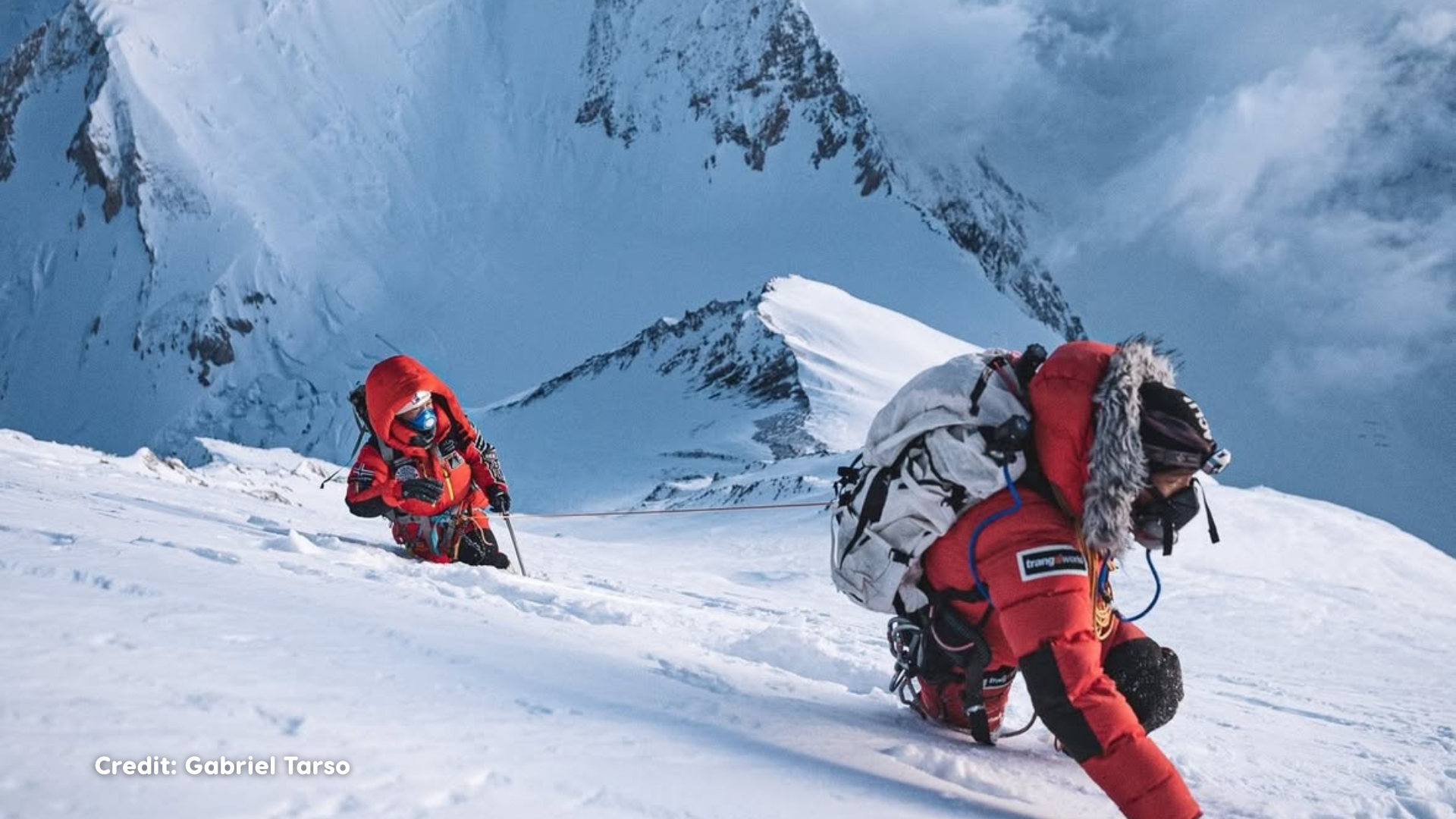
Like on Everest in 2021, there were a lot of people going for the summit that night from Camp 4. It's almost 8,000 meters. And many people were going. So me and my Sherpa, we just clipped into each other, so we have a rope between us. And then we just went on the side. So we didn't even go on the fixed rope, where all the other people were moving slowly, slowly, slowly.
So we just went on the side and we were passing a lot of people on the way up. But of course, it's not for everyone. You have to be in really good shape. And I'm very, very fast. I'm super fast.”
Her partnership with Lama was special:
“It's a lot of teamwork. It's a lot of teamwork. Finding your person.
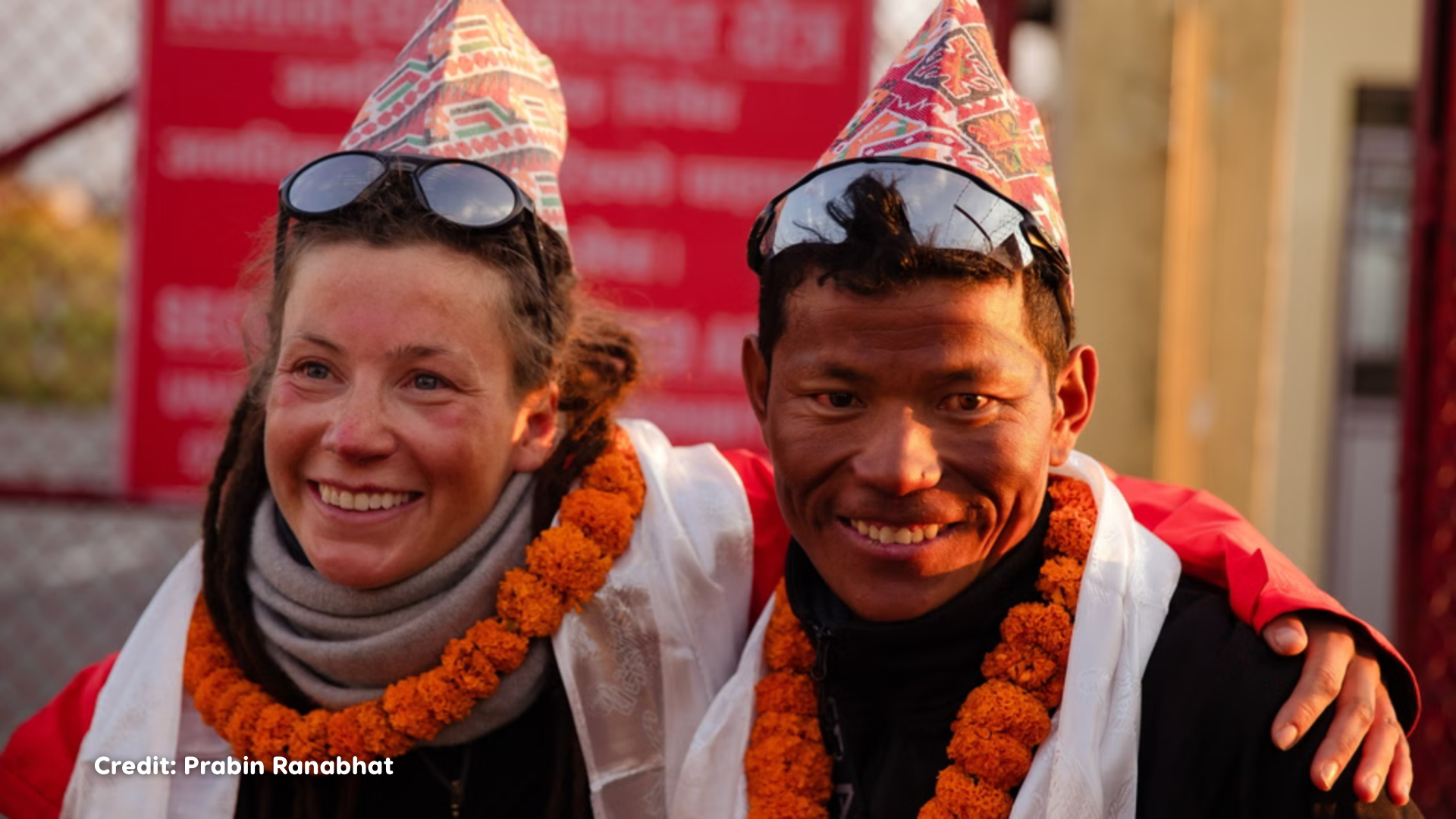
When I first met him, I was like, ‘Well, he must be my soul friend.’ Like he's my brother and a part of me right away. We were just so similar and we worked from the first day so well together. So he must be like the male version of me, and I'm the female version of him or something.
It's not very often you meet someone that you are so connected to.”
They hadn’t planned from the start to do all fourteen together:
“Lama, that I climbed with in 2023, he worked for the company that I was climbing with. I heard about him before and I met him a couple of times before.
And then it wasn't decided that he was going to climb it all with me. On the first mountain, it just worked so well. And on the second, it did. And I was like, ‘Wow, we are just so good together.’
And then I asked him if he wanted to come and do all the mountains with me, and he said yes. So that was very nice, and I'm very glad he wanted to and that it worked so well.”
■ A Rare Feminine Presence
When we talked about future records and local women, she said:
“To take the record, I think it's going to be so hard for anyone to take it.
If someone wants to try, especially if a woman came and asked me, ‘How do I do this?’ I would help whatever I could. But you have to be so lucky, like with weather and logistics and permits and so many things to do what we did.
At least one, Dawa Yangzum Sherpa—she's a female Sherpa—did all 14. I think she finished in October, a year ago. So I think she's the only one from Nepal, a female, that has it all.
I think we are maybe 14, 15, 16 women in total that have all 14 in the world. So it's not so many. And many came last year.
But I hope we can see more female climbers from Nepal, but also from Pakistan, because it's not so easy for the women in Pakistan to go and climb. So I hope that we can see more and more of that.
I was on this expedition now when it was six men and one woman, and that was me. But it's really nice to have the girlfriends there and other female climbers.
And I know there's one young lady from Afghanistan. She wants to… She's climbed Everest. She's been trying to get funding for a couple of years. I hope she will manage.
She's very young, but she's climbed the highest mountain in Afghanistan and a couple of other high mountains. I think maybe she's ready for the big challenge.
I think it's important to get these countries also, to inspire these small places we have in Pakistan. If they have one Pakistani woman that does it, I think it's really important.”
■ Logistics & Access
“Some of the mountains, we trek all the way. Say we drive to this point and then we trek all the way to base camp and then we establish a home. And from there we climb the mountains.
For some of the mountains, we go from Kathmandu to a small village by helicopter, and the next we go to base camp by helicopter. But you can only do that if you are acclimatized, because the base camps are from 4,200 to 5,700. So all the 8,000 meters are between there.
So if you go directly from sea level up to Everest base camp—that's 5,300—you will have a big problem. So you can only fly up if you are acclimatized enough to do that. If not, it's going to be really dangerous.
So some of the mountains in 2023, when we did the speed record, everyone thought we were flying helicopters between all camps. And it was about half of the camps we were flying to. But the rest we had to walk to, because it's not like on all the mountains it's possible to fly in.
Like Nanga Parbat in Pakistan, it's a really long trek in and trek out. And yeah, some of these mountains, it's really long. So it's a long trekking in. But we are prepared for that and know that.
And sometimes it's helicopters.
On Everest, the normal thing is to take a fixed-wing little small airplane from Kathmandu to Lukla, and then you trek for eight days and then you come to base camp.
But I think what we see also now is many do this tent, hypoxic tent at home. So they are acclimatized at home, and then they can fly directly up to base camp to use shorter time to climb Everest. So we see it's more and more normal now.”
■ Tracking the Body
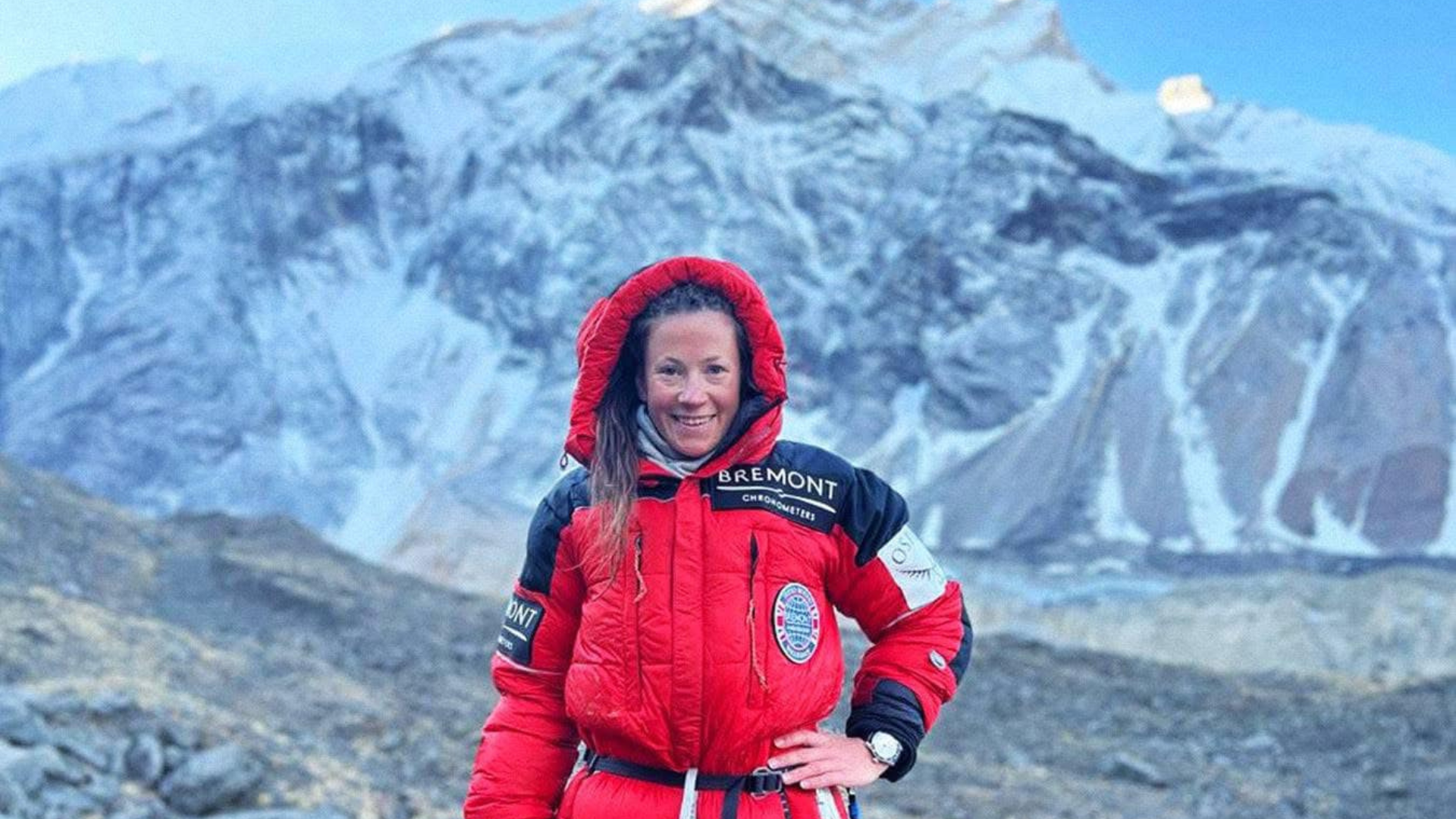
Kristin told me she likes to track certain things about her health :
“I check my sleep. Sometimes I feel like, ‘Oh gosh, I'm so tired, what is this?’ And then I see that I haven’t slept enough. So it's more like confirming I actually have had enough sleep.
And on my watch, I saw that all the levels dropped so much from the start of April, when we started to trek to Everest base camp, and it went down, down, down, down, down, down. And when I was in base camp and above base camp, it was just low level, everything.
And then when I came down, it slowly went up again.
Sleep is the most important thing for me to check.
But of course, when I'm home and I have all these days working, that means for me meetings and calls and a lot of work on the computer… those times it's more like actually also to make sure that you get enough physical activities during the day and not sit for eight hours. But of course, I remember that also, because I get so tired if I have to sit the whole day.
I'm probably a little bit of a geek on all these things.
But I do the scale also to scale my… mainly to scale my muscles, just because I think it's fun to see how the body is reacting to all these things that we do.”
Kristin doesn’t feel any cycle-related fluctuations in her performance, neither around her ovulation nor in her premenstrual phase.
“I haven't felt like, ‘Oh, now it's my period, now I feel more stressed or more tired and have less energy.’ I always feel like my training has been normal during the whole month. So I think I've just been lucky with that, that it doesn't bother me.
But they have done a lot of studies here—not a lot, but they have done more studies—on when to push during your cycle and when you will perform best.”
When I asked if she receives a lot of messages from women about preparation and dealing with your period in high altitudes, she said:
“Many ask how to do it. And I try to just say, try to not be stressed about it and just do it normally.
Often we share tents with many people, and they feel it's uncomfortable to clean or to change with no water and things. I try to: just do it.
Often we sleep with many Sherpas in the tent, and normally they are so okay with that. They are just like… I say to them, ‘Turn around, guys,’ and they do it. It's nothing to worry too much about. Of course, you probably want to take some extra care to wash yourself, and yeah.”
■ After the Record: Loss and a New Beginning
Her book, released in late October 2025, recounts not only the logistics and preparation of her record, but also the emotional cost, including the K2 accident and the loss of Lama. After that, she went to the South Pole on a solo expedition.
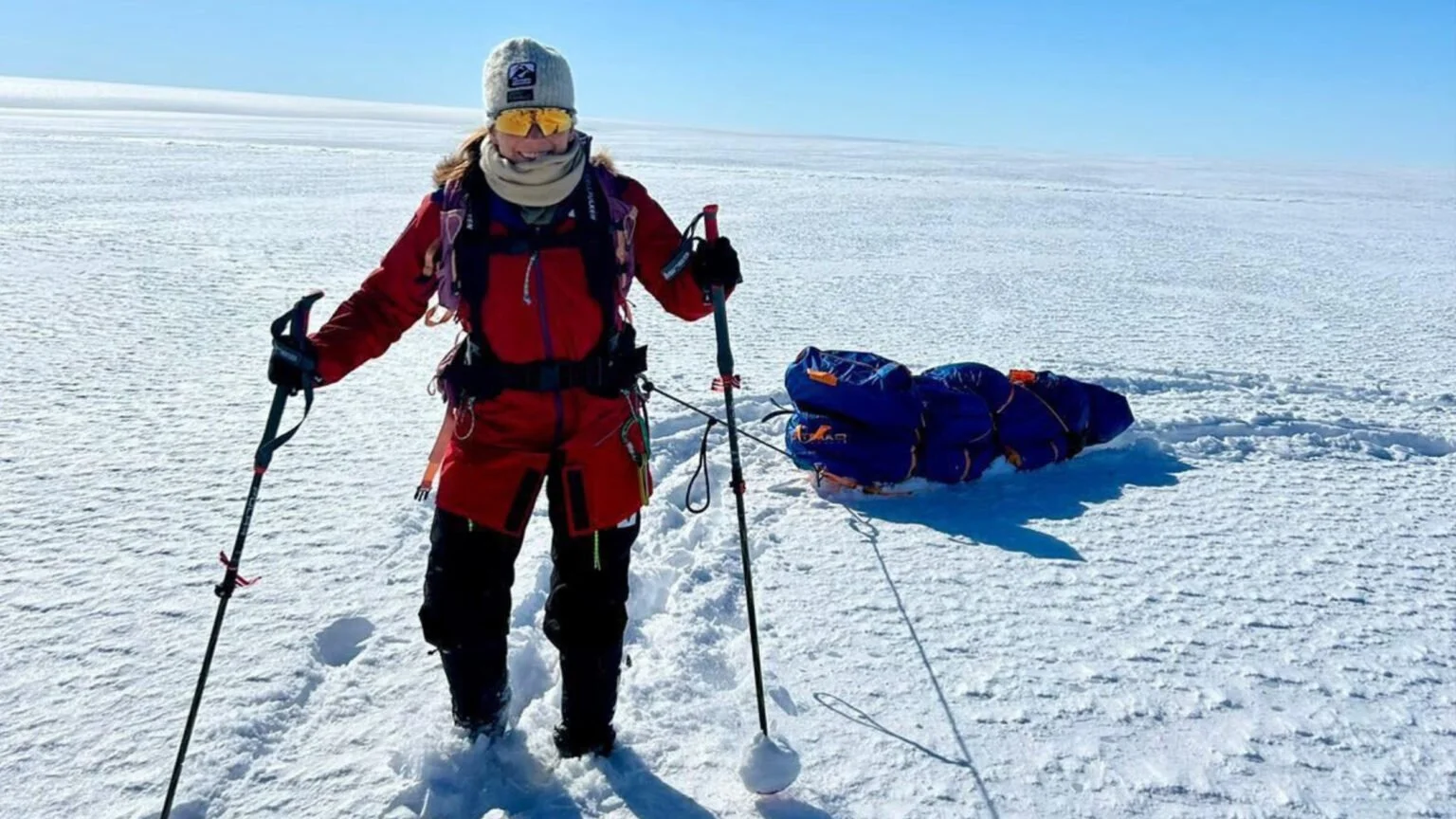
“Yeah, I wanted to do something else and get a new start. I went to the South Pole in December–January.
I haven't decided now if I will go back now in January or if I will wait a year. It's a little bit depending on how this next time goes, because now it's going to be intense, busy with the book and the speaking tour, and I need to feel ready to go and have everything prepared enough so I can feel like, ‘Okay, now it's good to go.’
But I know that in the spring, I will anyway go to Everest again and try to go up there without oxygen again. So that's the plan.
And we know the time goes fast and you need some time to prepare this big expedition. So that's both the South Pole and Everest without oxygen, it's on the plan. So we just have to see when it's time to go.
I think it was nice to do it alone. And many tried to prepare me like, ‘You're going to be so lonely and it's going to be so hard to be alone.’
And of course, it's different. But it was also nice to just disconnect from everything in the world and just to be there by myself and ski and have these super long, challenging days and struggle alone.
And when you go there for so many hours, you have time to think all thoughts through, because when we are down and in everyday life, we go in this loop where it's going faster and faster and we don't really have time to think things through.
So I think that was nice, to have some time and try to get a little bit rid of everything that happened and have a little bit of a new start.”
Returning to Everest after Lama’s death was emotionally heavy:
“In the spring this year when I was there, I was planning to climb with Lama's best friend, but he was busy with some other clients, and everyone knows that I can handle myself.
It was very sad to be there without Lama. Not so nice, actually, to climb without him.
I think skiing is different because it's not what we did. We did the climbing together, and to be up in the mountains without him is really weird and I guess really sad.
But I also think it's good to take the mountains back, because I normally used to love to climb mountains and I have to learn how to do it again without him.
So yeah, I just have to try and do one step at a time and try to find joy in it again.”
Despite her life abroad and in extreme environments, home still matters deeply:
“I love Norway and have a lot of family and friends here, and now I haven't been home in five weeks. I'm going home tonight, and I'm really looking forward to getting home. It's going to be so nice: have some days home and just relax.”
As we wrapped up, she reflected on how important it is to speak openly about topics like periods and female physiology in sports:
“I think it's really good that we have focused on this thing and that we can talk openly about it, and not that there is something or there is a problem—just to talk about it.
That it's just a natural part of the conversation, that women are different from men and that we have other things to take care of. I think it's very good.”
If you want to follow her relentless pursuit, she is very active online:
https://www.instagram.com/kristin.harila/
https://www.facebook.com/thekristinharila/
https://www.tiktok.com/@kristinharila
https://www.youtube.com/@kristinharila6580
https://www.snapchat.com/@kristinharila
kristineharila.com
https://www.lamasherpafoundation.com/